
![Pen_Pals_Matching_Chart[1].docx](classes/components/File/resources/images/none.png)
|
Pen_Pals_Matching_Chart[1].docx Size : 17.542 Kb Type : docx |
2.As a class we brainstormed what the students were interested in, and planned a series of hands-on science experiments. I hoped to teach project management skills, report writing, science theory based on the VELS standards and inquiry skills.
See photos below, demonstrating examples of this: a volcano to teach scientific change and chemistry, and "build your own car" experiment to teach project management skills and mechanics.
1.A series of embodied learning experiences for traditional subjects (such as maths) to express their learning through role plays, and cooking. By way of example, please see photos below of embodied learning experiences such as scientific experiments and pizza making in maths (to teach division, fractions and measurement.)


Students making cars for science volcano experiment
Pizza made by students in math class to teach division and measurement
2.Homework tasks to include families and home environments.
3.Photographic walking excursions with professional photographers, to teach mathematical perspective
Using ICT in the Classroom
I use a wide range of teaching strategies to ensure that the students are engaged, and given different opportunities to access the information through this delivery. I feel that understanding how to use ICT to add value to the classroom is vital in today’s teaching environment and can be a wonderful tool for whole class research, inquiry and sparking motivation. I am always wary of the ICT resources I use and ensure that I consider safety of students whilst using it. To do this I:
-
Ensure that I have pre-tested the resource, if it is a clip - I will watch it from start to finish to pick up on anything that might be inappropriate
-
I check the information provided in the resource is correct and is from a trusted source.
-
I ensure that I have follow up tasks that link to the curriculum and over reaching content so that the resource is the facilitator - no the driver of the learning - used as a point of enrichment, not the entire teaching tool.
When teaching, I often incorporate whole class research and discussion (via the smart board delivery) of various educational sites, including:
I. NASA: to assist in teaching earth and space science, teachers can also arrange a live skype discussion with an aerospace engineer through to the classroom:
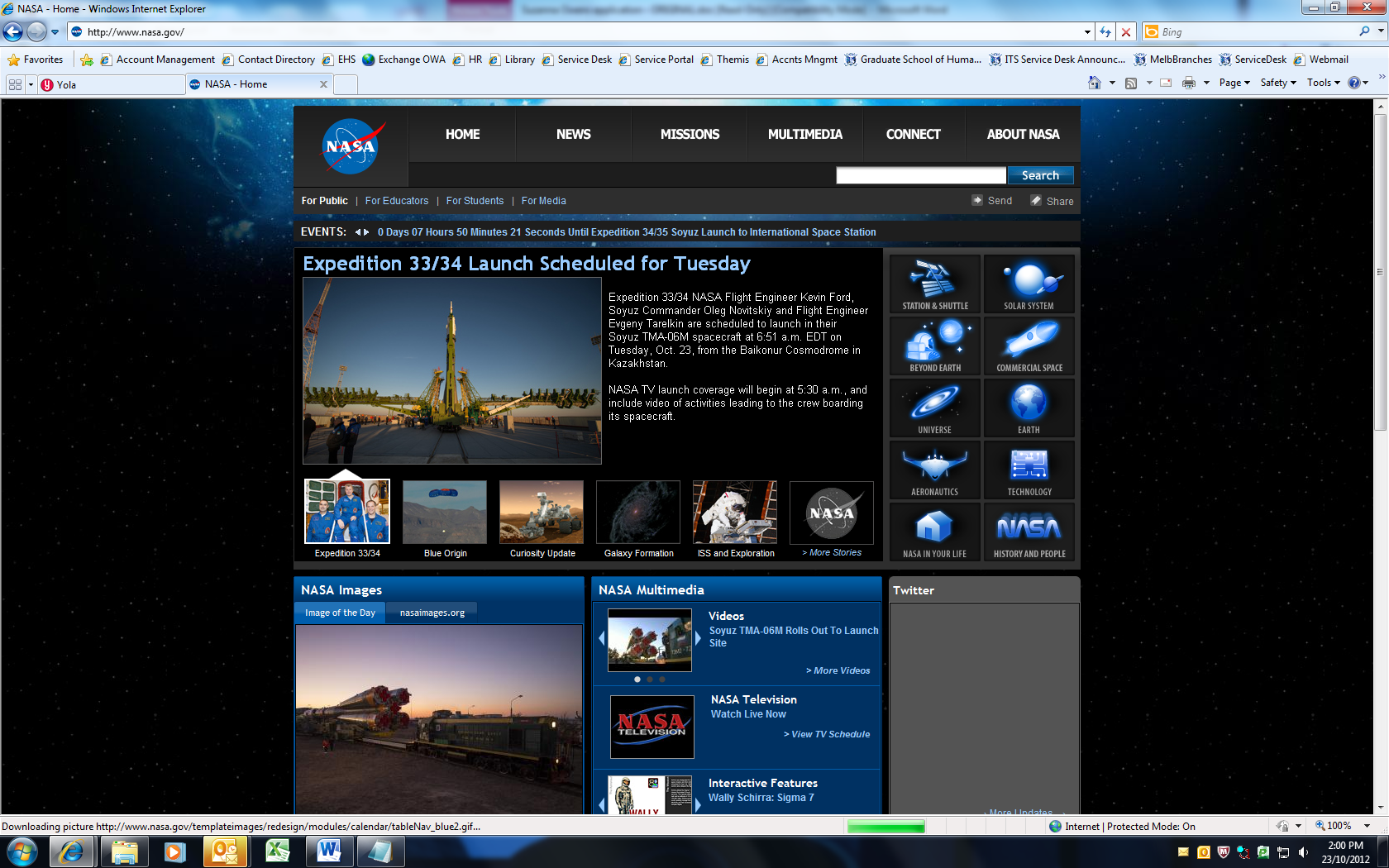
For instance, I used a time-lapse you NASA clip taken from the front of the International Space Station as it orbits earth at night. This movie begins over the Pacific Ocean and continues over North and South America before entering daylight near Antarctica. Students were enthralled with viewing visible cities, countries and landmarks and amazing weather conditions (including electrical storms!) we discussed and investigated:
-
differing weather conditions
-
perspective of the earth from space through discovering how a space station works:
http://www.youtube.com/watch?v=74mhQyuyELQ
This is a good sample of how technology enriches lessons and can inspire wonder and awe in students, the effect on the smart board was amazing and I was asked over and over to play this clip by the students.
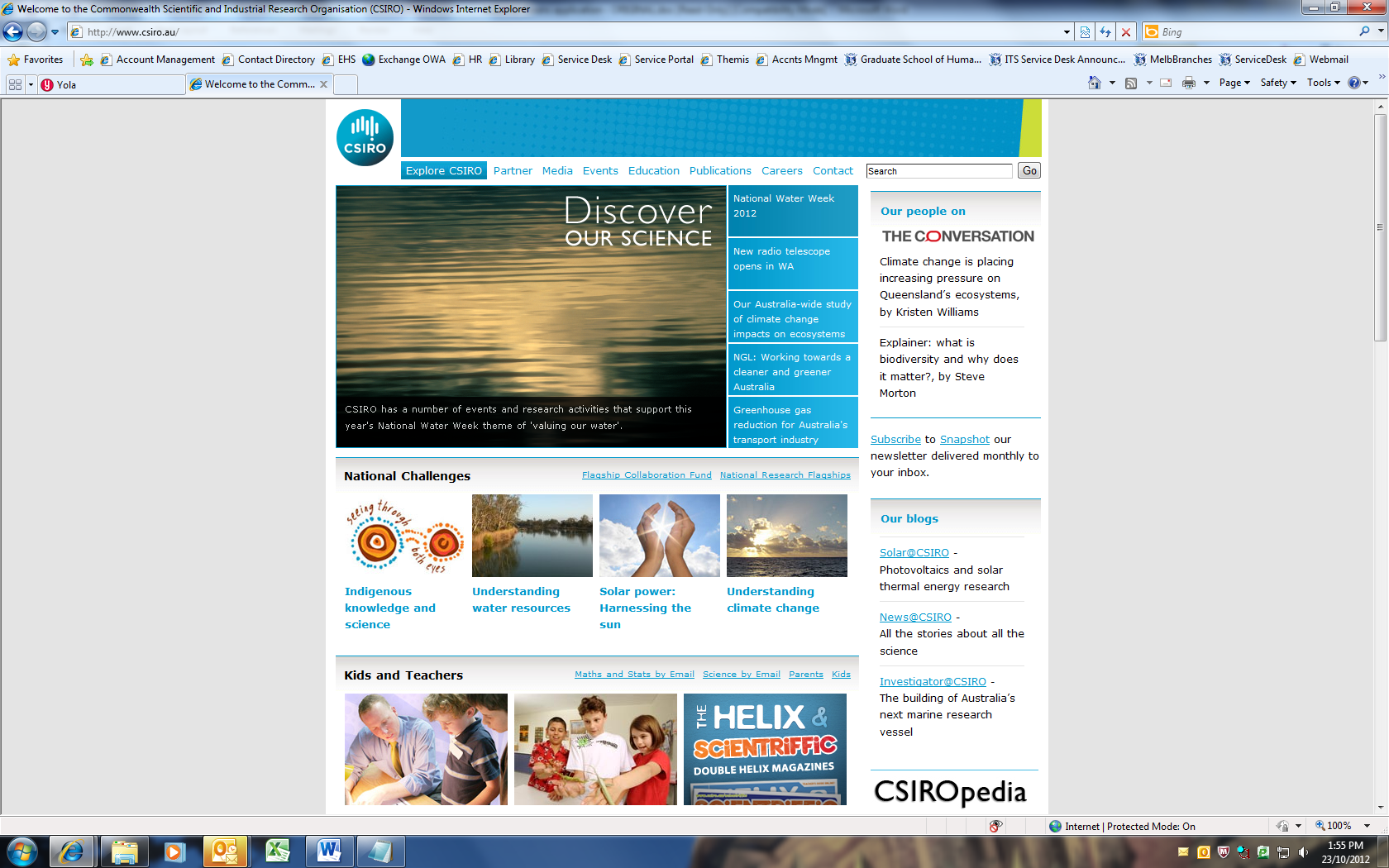
II. CSIRO: to assist in teaching Australian scientific research, theory and experimentation:
III. Australia Post: to assist in teaching geography, how to write a letter (Letter Link) and interactive games for children. During prac, I organised a ‘Write to an Athlete’ program via Australia Post, as part of the Olympics 2012 classroom theme:
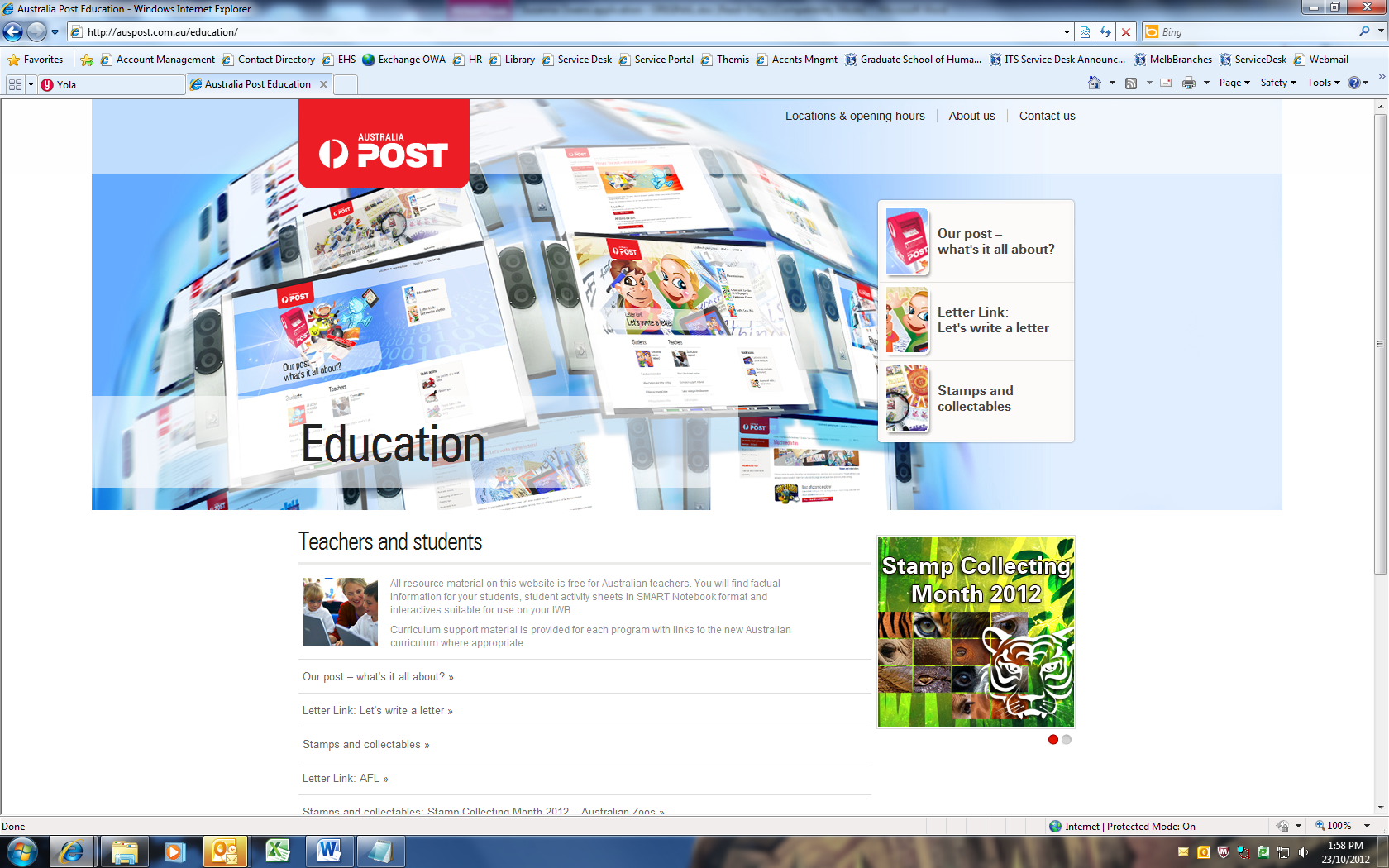
http://auspost.com.au/education/
IV. Kids Teaching Kids: A 'Knowledge Bank' of background information on environmental issues, online resources and workshop plans:
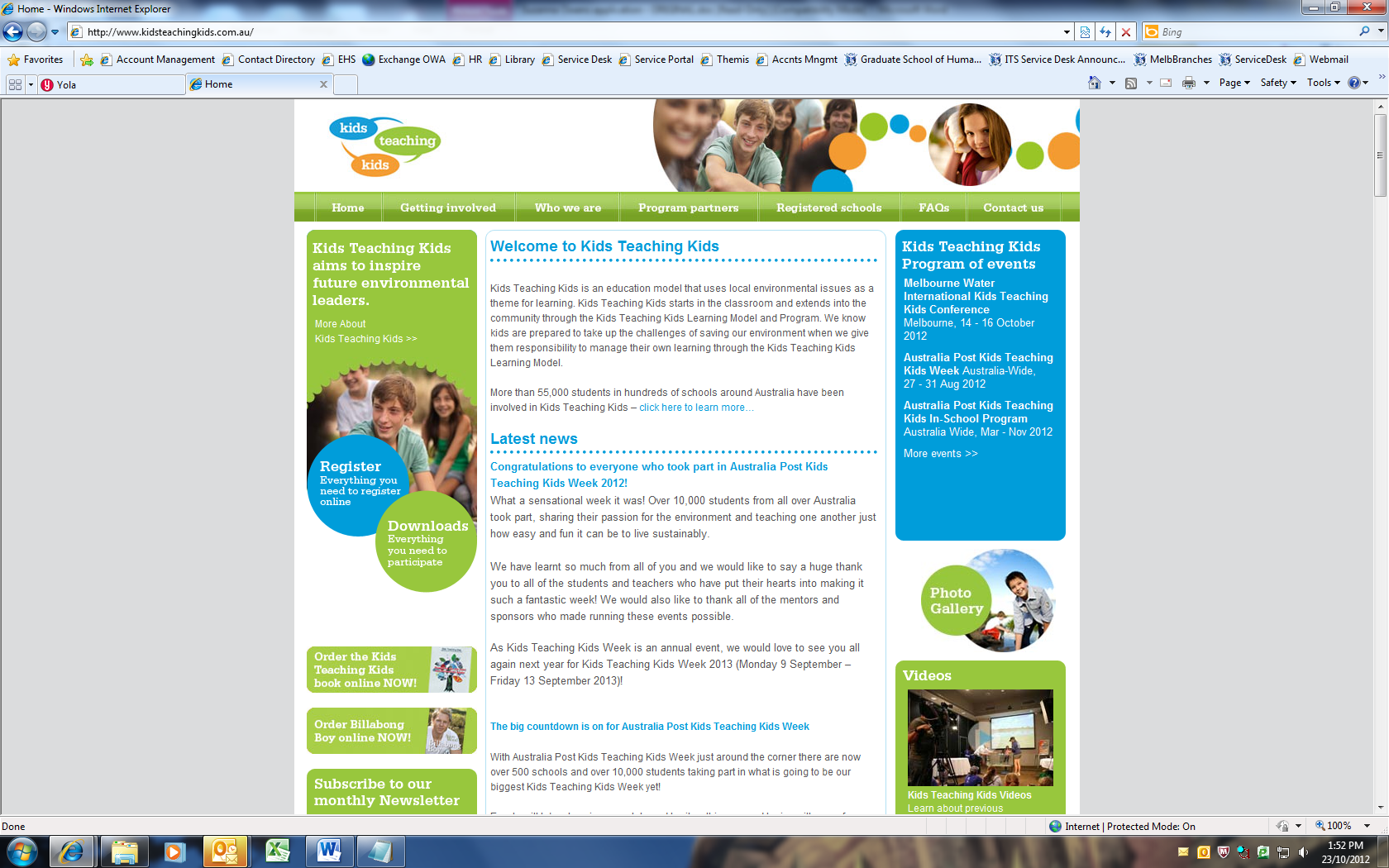
//www.kidsteachingkids.com.au/
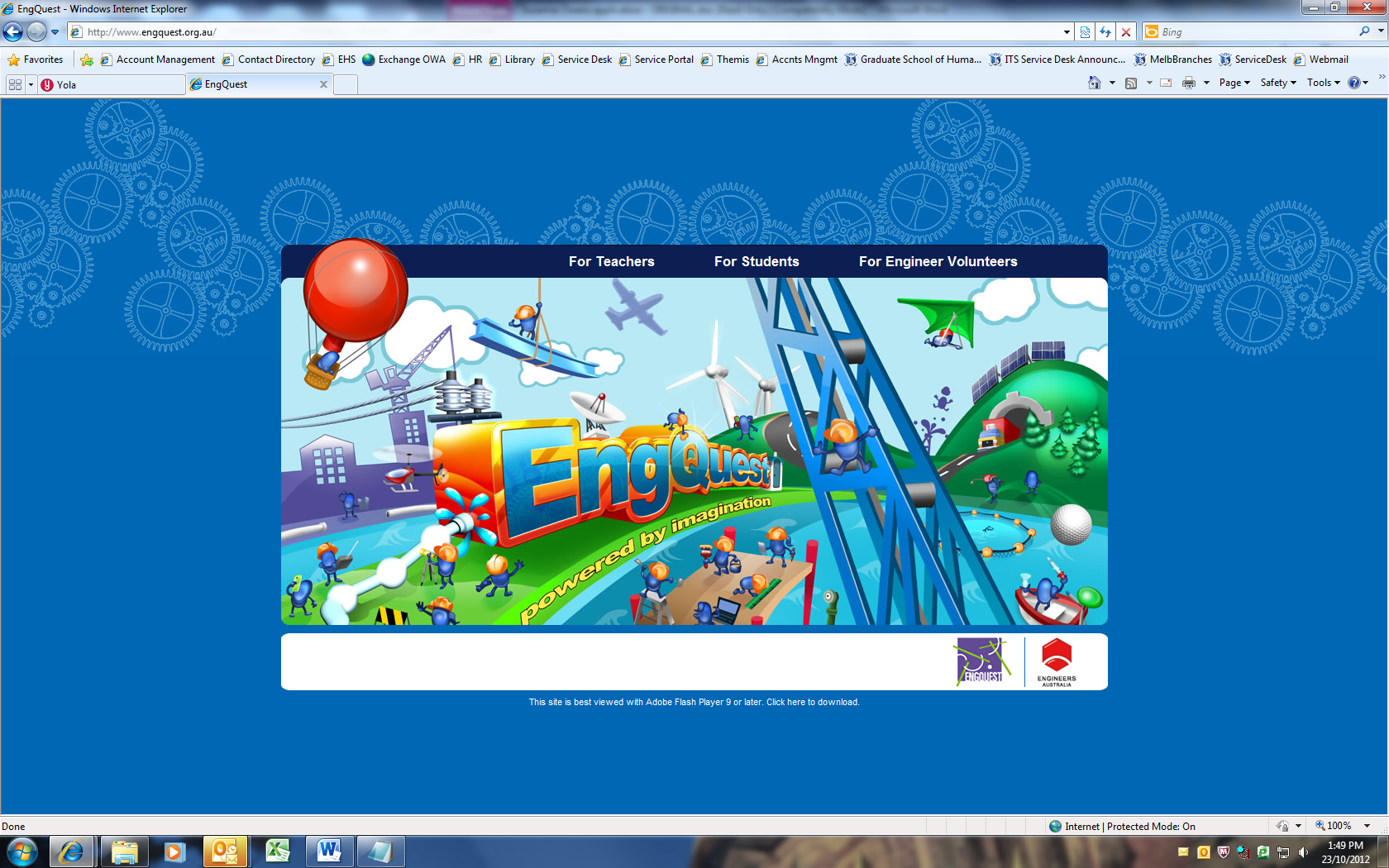
V. Engineers Australia/ EngQuest: A science and engineering website developed for primary school students. Which includes an 'Ask an engineer' forum to connect with engineers and a volunteers map to request an engineer to visit your school
VI. Mem Fox: a website dedicated to Mem Fox’s iconic Australian literature, animations and readings of her books. I used this website to teach author style as a topic, and also in teaching reading and writing rhythm, intonation and rhyming. I also used this site to play stories during lunch and 'relaxing time' as a point of calming the students.
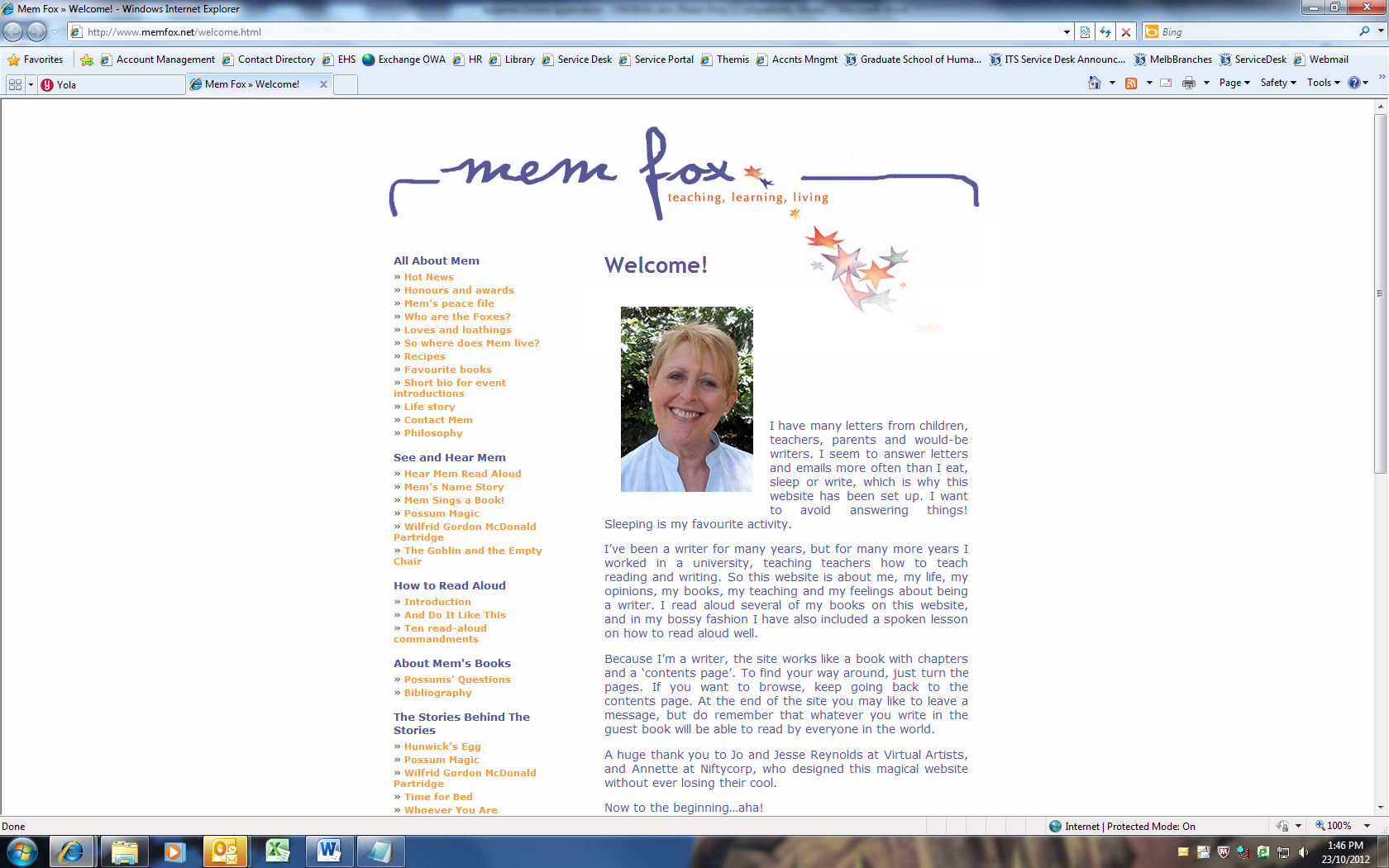
http://www.memfox.net/welcome.html
Using technology as a vehicle for discussion, innovative delivery of resources and research is ensures that I veer away from only teaching from the textbook or worksheets, and allow my students to actively learn through a medium that they are familiar with. and that they can interact with.
3.5 Demonstrate a range of verbal and non-verbal communication strategies to support student engagement
At the beginning of each school day, I make sure that I greet students warmly and happily, chatting to them about upcoming school events and commenting on students and their personal achievements outside of school, such as winning sporting events. For students lacking confidence, I make myself available and provide extra support with class work and new concepts. I ensure that my students see me as a friendly, approachable adult who will listen to them and act on their needs and concerns. Communication with students is imperative for setting firm expectations, producing highly effective classroom management and developing a positive learning environment. It ensures that we do not fall into the trap of teaching “at” students as if they are empty vessels, but teaching with them and allowing them to be active participants in their learning.
When communicating with students, I ensure that I:
• Use a clear voice with good tone and modulation,
• Translate a difficult concept to a student’s level of understanding,
• Articulate my high expectations of learning and behavior,
• Assist students in setting goals,
• Build rapport with my students and others,
• Reflect and discuss student’s learning progress with them,
• Speak in front of large audiences including school assemblies
3.7 Describe a broad range of strategies for involving parents/carers in the educative process.
During my Professional Practicum, I was always keen to be included in parent/ teacher meetings and through these communications; I gained a thorough understanding of my students and their background. I ensured that I maintained regular communication with parents, establishing a partnership to encourage motivation, better attendance and improved effort from the students. I also made myself available in the afternoons to speak with parents who prefer face to face contact, to discuss strategies, concerns and goals for improving the student’s academic results and engagement in class. I have found that parents are often quite assured by the knowledge that their child is being cared for and given the attention they deserve, both academically and personally. I consistently demonstrate qualities of diplomacy and empathy, allowing parents to express concerns in confidence, while discussing the range of issues that might be affecting their child in the classroom.
Please see the below reflection/ observation based on student/ teacher meetings to discuss the progress of particular students during my Professional Practicum.

|
Reflection 30 August 12.pdf Size : 231.101 Kb Type : pdf |
