This section will include assessment submitted during my Masters in Education in an effort to demonstrate the focus areas and how these correlate towards teaching practice.
Course Description
This course is designed to meet the needs of educators, educational administrators, managers, policy makers and others interested or involved in learning and education or working in the wider educational community, who wish to pursue studies at postgraduate level. Students choose from a broad range of units and have the option of completing a designated specialisation pathway. Students may also undertake a research thesis or professional project as part of the course.
Outcomes
These course outcomes are aligned with the Australian Qualifications Framework level 9, the Bologna Cycle 2 and Monash Graduate Attributes. For more information refer to http://opvclt.monash.edu.au/curriculum-by-design/aligning-course-outcomes-with-aqf-bologna.html.
Upon successful completion of this course it is expected that graduates will be able to:
- extend their knowledge, understandings and skills in educational research and practice
- explore both the theoretical and practical aspects of teaching and learning, whether in early childhood settings, schools, workplaces or other settings
- investigate and examine the nature of professional learning and develop deeper understandings of evidence-based practice
- explore the relationship between research and practice
- display critical and analytical skills in discussing relevant and substantive research
- demonstrate knowledge about a range of research methodologies.
Psychological characteristics of giftedness with a focus on asynchronous development and the misdiagnosis of ADHD.
Abstract below, full research paper attached.
Considering the gifted child as a tapestry of complex intellectual, emotional and social constructs is imperative in fully supporting not only the student’s academic development, but the development of the person as a whole. Whilst not sighted on any curriculum documents; Teachers, by the very nature of their profession, have a duty of care to be responsible for the positive development of their student’s academic, emotional and social well-being whilst in their care. Being neglectful or flippant of this duty of care is detrimental to the students and teacher’s well-being alike.
This paper examines the importance of considering teacher attitudes towards gifted students, and the impact that negativity can have on the gifted child’s social, emotional and academic development. Within the scope of emotional wellbeing of gifted children, this paper will explore a specific psychological characteristic of giftedness known as “asynchronous development” and what connection this characteristic might have on behavioural difficulties and in turn, negative teacher attitudes and misconceptions towards gifted students.
According to Smith and Chan (1998), attitudes toward the gifted are important because:
“There is a common consensus among gifted educators that appropriate identification of an programming for gifted and talented students depend greatly on teacher’s attitudes, views, understanding of the nature of giftedness and issues regarding education of the gifted”
(Smith and Chan (1998) in Plunkett (2002) p.240)
I understand Smith and Chan’s (1998) point above to be multi-faceted, suggesting that the development of giftedness is reliant on:
1. the quality of a positively differentiated curriculum, responding to the academic needs of the student, and;
2. a supportive environmental classroom culture which understands and values difference, special talents and giftedness. This in turn meets the socio-emotional needs of gifted students to be supported and develop self-confidence in their abilities to achieve.
Both factors are highly influenced by the teacher, school culture and school curriculum policies. In so doing, a positive and enthusiastic attitude that is furnished by specific training in understanding and supporting giftedness is imperative to the success of developing gifted students.
Being self-reflective, a common misconception about social characteristics concerning giftedness I held as a pre-service teacher was to assume that the brightest children would be quiet, studious, concentrate for long periods, attentive and curious. This misconception is common, informed by an ignorance of how gifted children’s cognitive overactivity can influence overexcitable behaviour. Lisa Rivero (2012) discusses this in ‘Many Ages at Once’ for ‘Psychology Today’:
“Many people assume that the brightest children in the classroom are the ones who are most able to pay attention, to sit still, to do their work, and to conform to the expectations of authority. They are the children who know how to act their age, at least; or, even better, they display unusual maturity. They fit in and are easy students to teach.”
(Rivero (2012) p. 44)
Certainly, if this is the assumption of behavioural characteristics of giftedness held by teachers, experiencing otherwise might draw negative attitudes towards the student as they had not lived up to the expectations suggested above.
Whilst many students in my class portrayed these characteristics however, many did not. In particular, the children who had been identified as gifted. These children were overactive, vibrant, intense, creative, overly demanding of attention and intriguing. They added colour and excitability to my classroom. Certainly, they were often the most likely to throw tantrums, overreact and become emotional though they were also the most likely to throw in wonderfully insightful concepts to whole class discussion. Of the four gifted students in my classroom, three were recently diagnosed with ADHD. Over the course of the term, all three were placed on medication to treat the diagnosis. I watched them progress from happy, excitable, colourful children to what could only be described as muted. Certainly in treating the ADHD diagnosis, in the hope that their behaviour would be ‘tamed,’ it was apparent to me that the whole child had been treated and their intellectual ‘spark’ deteriorated. I was heartbroken for them, and searched for answers.
I watched in disbelief as staffroom discussion concerning these children centred around how much more ‘manageable’ they had become in their muted state. This is a true observation, they certainly had become more manageable, and so are lemmings. I didn’t want a muted classroom, I wanted a vibrant classroom and given the drastic change in their behaviour and apparent intellectual creativity, I felt a duty of care to investigate as to whether the children had in fact been mis-understood and mis-diagnosed.
My concept was simple. As If cognitive traffic is exaggerated in the gifted child, then certainly this might in fact be exhibited in physical overexciteability, correlating with ADHD behaviours and chemical construct. Also, if one treats the overexciteable behaviour with medication designed for treating ADHD, does this influence the intellectual and creative attributes and abilities? My observations in the treated students certainly attested to this.
Considering Dabrowski’s (1964, 1967, 1972) Theory which is founded in neurological science, clearly there are some connections between the “overexcitability” in which he had identified as inherent in the gifted child and the diagnosis of ADHD. Sal Mendaglio (2001) agrees:
Dabrowski’s theory of positive disintegration (TPD) (Dabrowski 1964, 1967, 1970, 1972), while largely unknown in education, psychology and psychiatry, has found a home in gifted education. It has been used to address various aspects of gifted students’ functioning, including emotional sensitivity and intensity (Fiedler 1998; Piechowski 1997); misdiagnosis of conditions, such as ADHD (Baum, Olenchak and Owen 1998); creative personality (Schiever 1985); spiritual development (Morrissey 1996) and counselling.
(Mendaglio, S., and M. C. Pyryt. 2001. P.98)
Mendaglio (2001) then raises a significant point: “Arguably, TPD has implications for the education of gifted students, but it provides no strategies or techniques that can be readily applied to the classroom.” Mendaglio (2001)
I would disagree with this, primarily because I feel that researchers, teachers and specialists can use the linkages between diagnosing ADHD and Dabrowski’s (1964, 1967, 1972) Theory of Emotional Development to inform a concise diagnosis of giftedness and / or ADHD by considering the similarities between a clear case of struggles with asynchronous development or ADHD. Certainly, a teacher who may not be familiar with the psychological characteristics inherent in the gifted such as asynchronous development might refer the child for assessment of ADHD. Though I would assume that in some situations where gifted children have received a correct diagnosis, giftedness is still a factor to consider and should follow a specialised diagnosis and treatment process. Webb & Kleine (1993) agrees:
“existential depression or learning disability, when present in gifted children or adults, requires a different approach because new dimensions are added by the giftedness component. Yet the giftedness component typically is overlooked due to the lack of training and understanding by health care professionals”
(Webb & Kleine, 1993).
Clark (1992) and Seagoe (1974) also agree, suggesting that a mis-understanding by parents, educators, and specialists, in addition to “problem situations (e.g., lack of appropriately differentiated education) leads to interpersonal problems which are then mis-labeled, and thus prompt the mis-diagnoses.” Clark (1992) and Seagoe (1974)
Behaviourally speaking Clark (1992) and Seagoe (1974) suggest that characteristics most prevalent in the gifted child as a result of asynchronous development closely mirror that of a diagnosis of ADHD such as intensity, sensitivity, impatience, and high motor activity so one could be forgiven to suspect ADHD in the individual. This is true neurologically speaking also.
According to Loye (1993), for moral sensitivity and overactivity “is imbedded in a prehuman and human evolutionary sequence; largely governed by frontal lobe development” (Loye, 1990). Whilst the diagnosis and treatment of ADHD is in effect an overactivity in the same area, as identified by Diane Purper-Ouakil, Nicolas Ramoz, Aude-Marie Lepagnol-Bestel, Philip Gorwood4 and Michel Simonneau:
“Attention deficit/hyperactivity disorder (ADHD) is a highly prevalent neurodevelopmental condition, characterized by symptoms of inattention and impulsivity/hyperactivity to a degree that is inconsistent with developmental level. A variety of brain subregions including frontal and parietal cortexes, basal ganglia, cerebellum, hippocampus, and corpus callosum were found impacted in ADHD”
Loye, D. (1993, May). P.6)
The diagram below demonstrates the frontal lobe area of affected and treated:
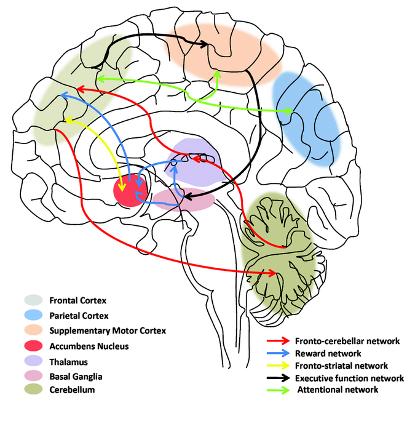
Image from: “Neuropsychiatric Disorders and Pediatric Psychiatry” (2001)
http://www.nature.com/pr/journal/v69/n5-2/full/pr9201196a.html
Certainly there are also links to Rivero (2012) suggestion that asynchronous development in the gifted is an ‘out of sync’ between their behaviour, intellect and chronologic age with Diane Purper-Ouakil, Nicolas Ramoz, Aude-Marie Lepagnol-Bestel, Philip Gorwood and Michel Simonneau noting the behaviour exhibited by ADHD sufferers is often is inconsistent with developmental level.
Unfortunately though, medication is also targeting this area, which would certainly impact the individuals capacity to develop emotionally and perhaps academically. This had certainly been my first hand observation described above. The three students discussed above diagnosed with ADHD and giftedness were prescribed medication Ritalin-AE. Susan M. Baum, F. Richard Olenchak and Steven V Owen in (Webb & Kleine, 1993) argue that treating ADHD with this medication is damaging to the development of giftedness:
“Medications are usually successful in controlling behaviour, but they are also suspected to inhibit creativity and intellectual curiosity in bright children. Anecdotal reports tell of gifted youngsters being “cured of their giftedness” in an effort to help attend to schoolwork”
(Susan M. Baum, F. Richard Olenchak and Steven V Owen in Webb & Kleine, 1993)
I would argue that this point is a demonstration of the effect ADHD medication (such as Ritalin-AE ) has on emotionality and creativity represented in Dabrowski’s (1964, 1967, 1972) Theory on Emotional Development and excitability of gifted students, “evidence of unchallenging curricula (Reif, 1993), implications of the multiple intelligences paradigm (Gardner, 1983), and adult reaction to students’ extreme precocity (Rimm, 1994).
However, Susan M. Baum, F. Richard Olenchak (1994) and Steven V. Owen (1994) identify that “no conclusive research exists to explain the impact of such medication on various thought processes, including those related to potentially creative, productive thinking.” So, at this point it is only anecdotal.
I introduced this paper as a discussion towards considering teacher attitudes towards giftedness as imperative to the emotional, academic and social development of the gifted child. Within this context I have considered diagnosis and probable mis-diagnosis of ADHD in gifted students, and the effect treatment of this condition can effect their development. In the case of the three students discussed above, I can attest that negative attitudes towards their extreme behaviour within the classroom and to the students themselves (behind closed staff room doors) certainly attributed to a quick referral and diagnosis of ADHD and an equally quick suggestion towards a prescription of medication to treat it. My primary concern is that this lack of research into how the child may be affected in all aspects, consideration of common behavioural attributes of the gifted such as asynchronous development and common overexcitability (Dabrowski 1964, 1967, 1972) might have led to the student’s being mis-understood and in effect – harmed.
Kagan (1992) agrees with this, suggesting that by acceding specific training and understanding on giftedness can alter negative perceptions:
“Teachers who do desire professional growth can alter their dysfunctional conceptions about students if they are confronted with specialised training or experiences that challenge their beliefs”
( Kagan (1992) , in Plunkett (2002) p.241)
Plunkett (2002) also agrees, suggesting that neglect of specific training in giftedness in an effort to dispel misconceptions, personal beliefs and prejudices might result in damaging students. Whitmore (1980) illustrates:
“’Good’ teachers who are unprepared to teach gifted students may not only be ineffective with them, but may also become primary contributors to the development of underachievement behaviours and negative attitudes”
(Whitmore (1980) p.400 in Plunkett (2002) p. 242
Certainly, as a teacher, I can attest to wishing overactivity away in students on occasion. However, being informed in the psychological, emotional and neurological factors contributing to their behaviour discussed above has certainly furnished me with reasons for their behaviour – particularly in gifted children. I am incredibly grateful for this insight because in so gaining, I am able to better understand my students and adapt class activities around understanding their sensitivities and overexcitabilities. I can also understand that differences in their behaviour might leave them very much alone and isolated in the playground and this is important to teach out for from a wellbeing point of view.

|
EDF6607 Assessment 2, Suzanna Owens 25052152.docx Size : 309.657 Kb Type : docx |
Research Project, Bullying and the Gifted Child:
Prevalence, effects and school centered solutions
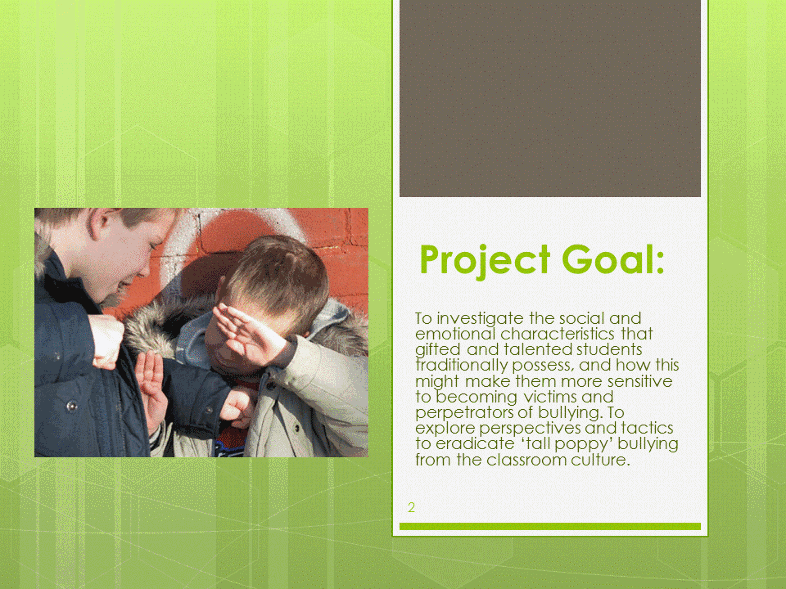
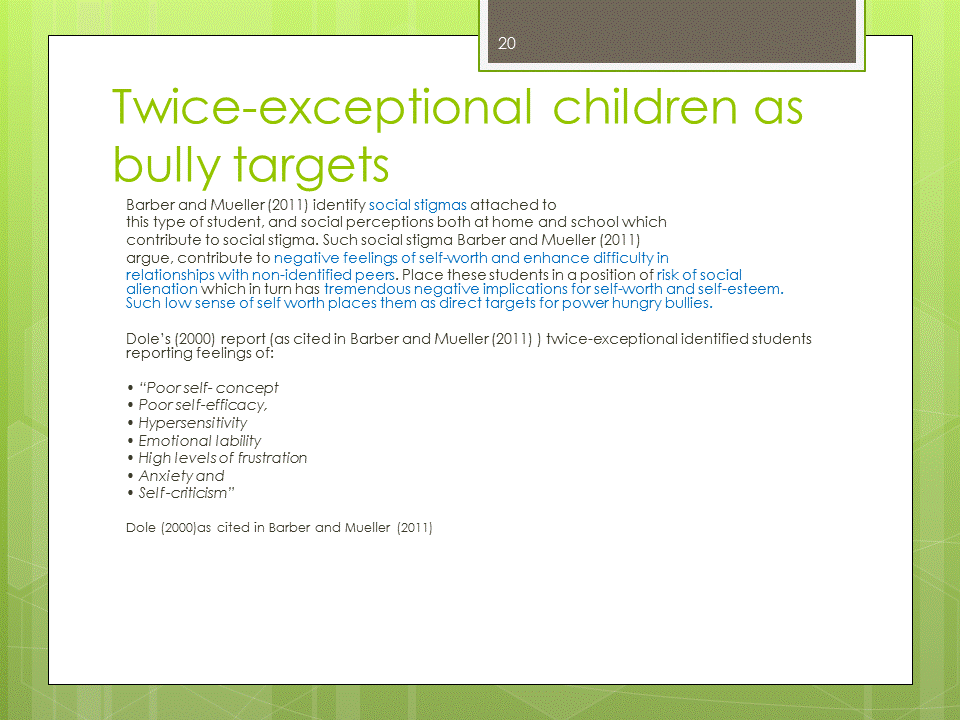
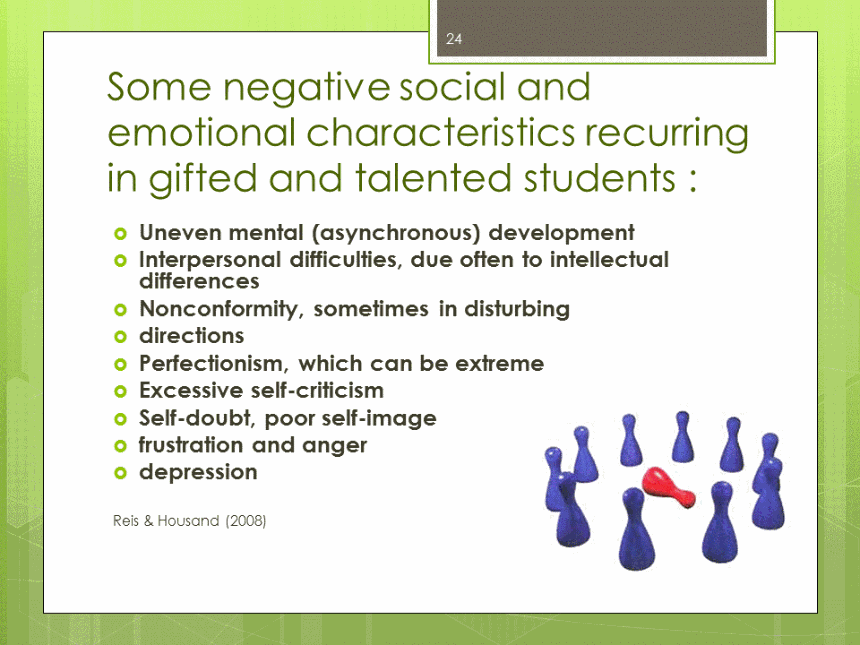
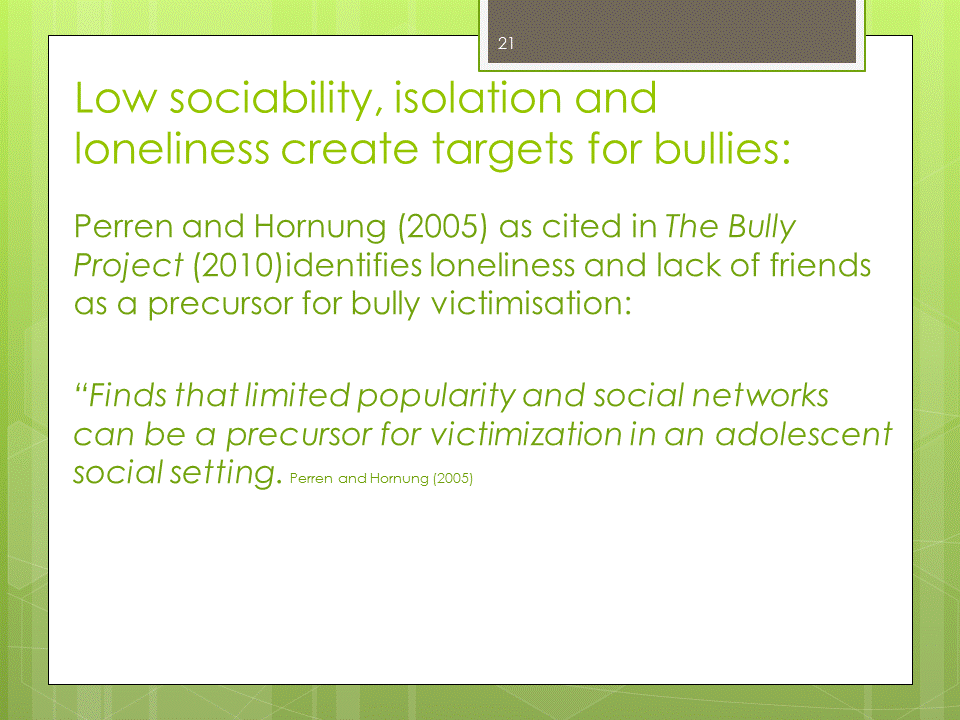
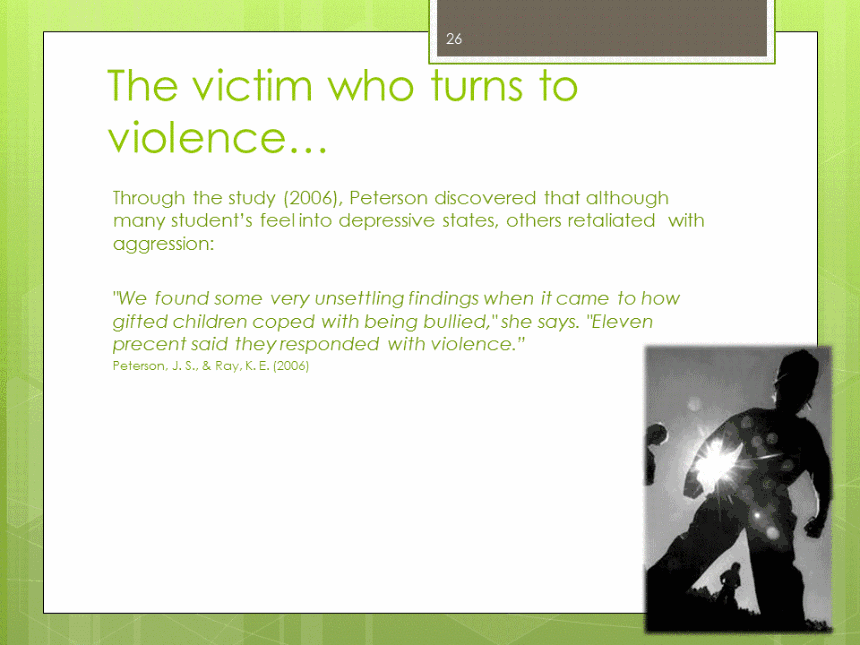
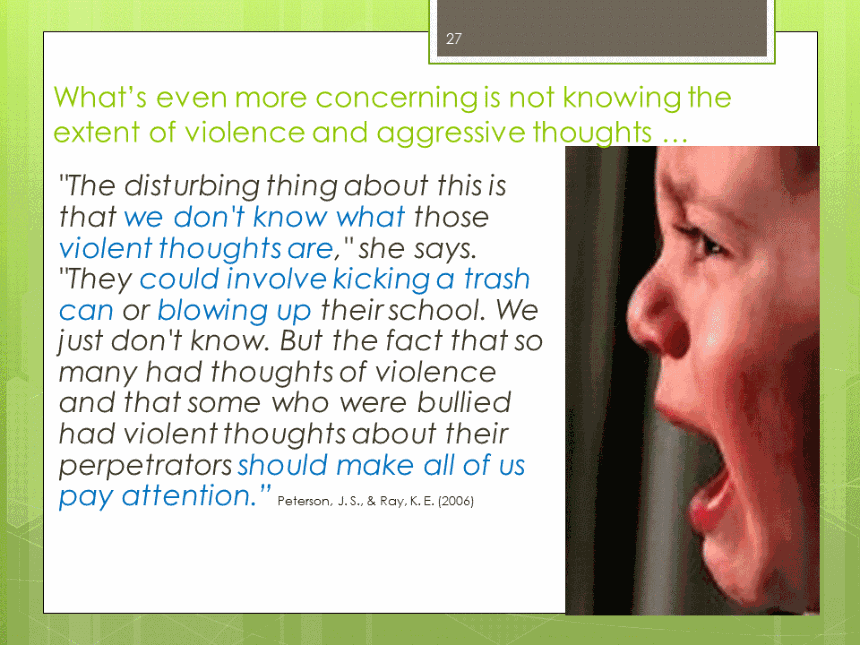
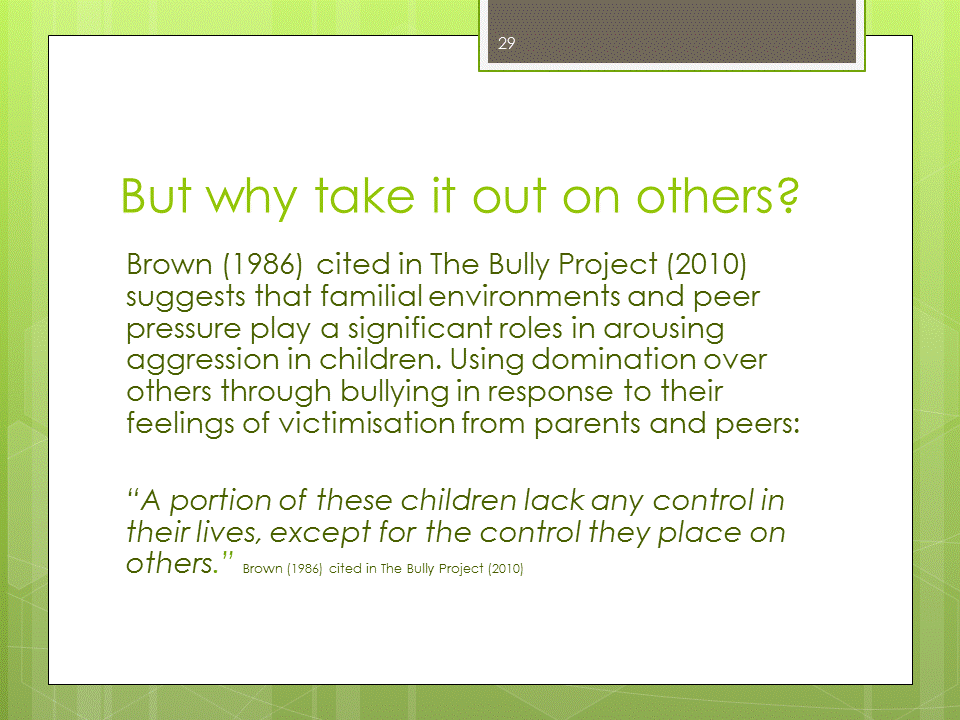
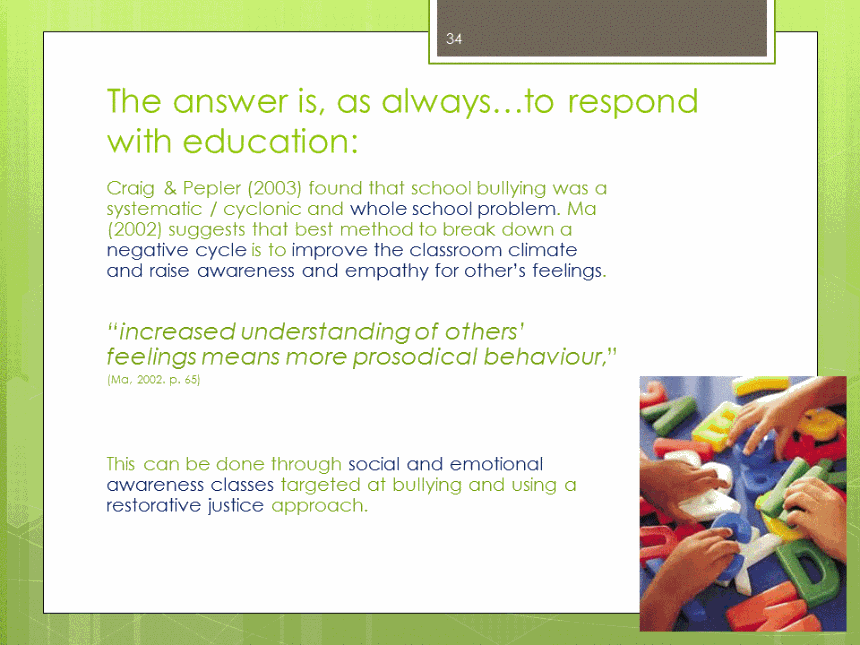
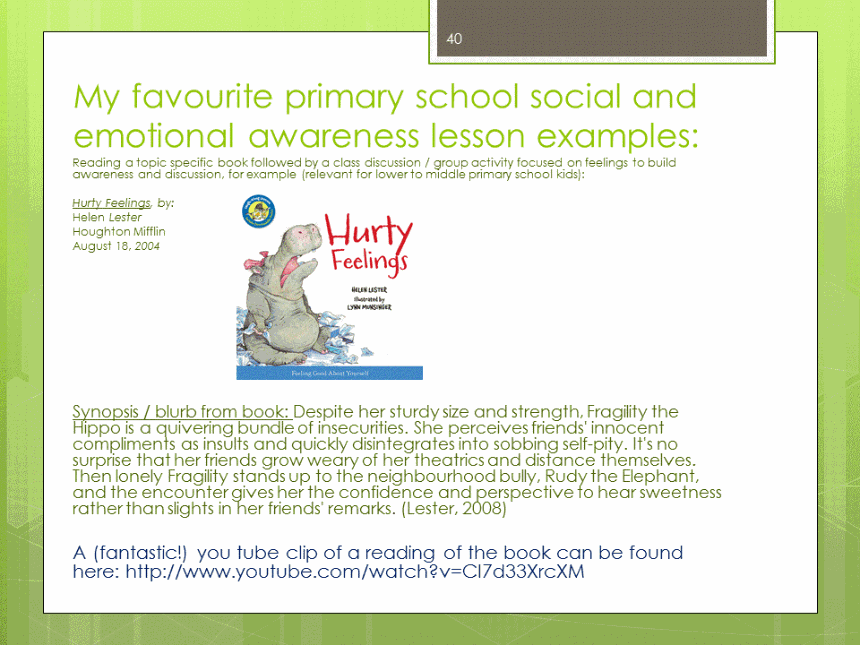
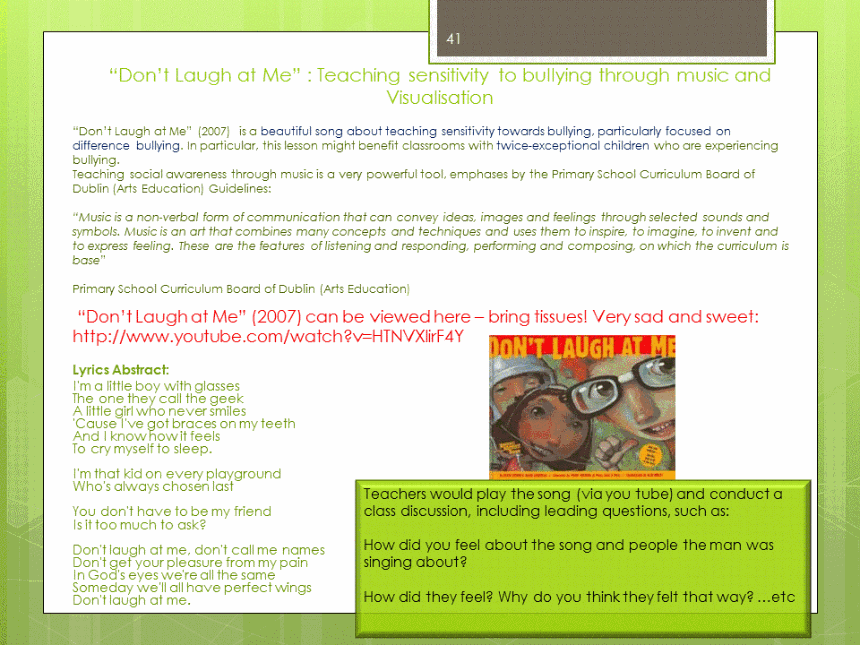
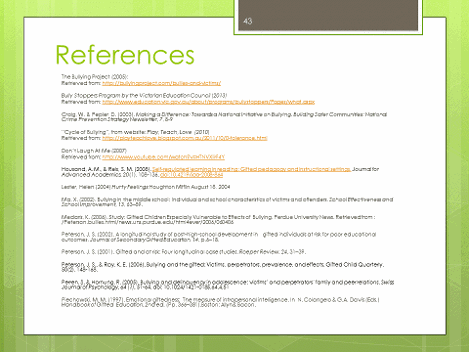
An independent research project I conducted this semester focused on bullying in and of Gifted Children. The topic, modes of research, collection of data and representation of data were all decided by the student. I chose this area as a point of personal interest and because I identified it as an important issue of the day. My interest and research specifically lay in the prevalence, effects and School Centered solutions surrounding bullying and the Gifted Child. An abstract from this project can be viewed here:




Details of task:
A Reflective Journal will be used to record your summaries and reflections on the
assigned readings. Approximately 6000 words.

|
EDF6613 Journal Suzanna Owens 25052152.pdf Size : 1240.271 Kb Type : pdf |
