Although this summary hopes to respond to all sub-strands relevant to Standard 4 as a whole, I am looking to specifically address:
4.4 Maintain student safety
4.3 Manage challenging behavior

4.4 Maintain student safety
Hopkins D. (2005) defines teacher’s the duty of care by stating:
“The law regards the teacher-student relationship as having a special welfare component"
Hopkins, D. 2005. Teachers, students and the Law. Melbourne: Victoria Law
Considering the safety of students is highly important, especially considering many of my activities were active. An example of my consideration for student's safety is the organisation of an off campus walking excursion. I had organised a walking excursion to take photographs around the local area for the school's annual art show, to demonstrate consideration of teacher duty of care and safety considerations I had prepared an excursion information sheet for parents and:
· Highly staffed the excursion with teachers (3 per 27 students) and parents (7) to adequately supervise the children
· Educated the students on the ‘class rules’ whilst outside on excursion (nobody walks across the rd alone…etc)
· Routed our walking track and handed out copies to all supervisors (and the Principal) with a time frame for each ‘stop’
Another area that is of considerable safety concern is conducting science experiments, especially with young children. I absolutely love incorporating science experiments in my lesson program as the children are actively involved, interested and excited about the results. During PI I conducted 8 science experiments over 6 weeks. My key considerations were to ensure that:
- I had pre-tested out the experiment myself for potential dangers
- I knew the properties of the chemicals involved (if any) in the science experiment and that they were non toxic
- I had the appropriate classroom set up and safety protective wear for the students and myself.
During 1 lesson featuring a rather exciting chemical reaction is the classic: "Build a volcano." I knew that this lesson had the potential to be quite dangerous and so safety measures must be given a great deal of thought. The students will be required to wear their art smocks during the experiment. Students also needed to wear safety goggles and gloves.
As advised by Skamp (1998), it’s important to keep in mind the following when conducting experiments:
“Stress safety precautions rather than dangers realise the impact that excessive movement can cause"
Skamp, K. 1998.Teaching Primary Science Constructively. 3rd Edition Cengage Learning Australia
As such, I decided to complete the experiment as a class to avoid excess movement.
I also appointed a ‘safety monitor’ for the experiment who is responsible for reminding members of the class to be wary of the safety of their peers. Of course this did not abdicate my responsibility as the primary authority but I felt that having a peer presence encouraged the students to monitor their own behavior. I also considered time management to be very important. Given too much time, the students can get restless and bored so I made sure that I kept it snappy.
Please see an example of the lesson plan for the class here:
|
science experiment.docx Size : 1618.741 Kb Type : docx |
This lesson was exciting for the students and the chemical change concept was experienced though I learned a great deal about safety also. I recorded the experience, please click this link to view (private view you tube clip - hyperlinked):
As you can see, the students were very excited. This is partly due to the anticipation they had towards the experiment, and also to the fact that:
-
I conducted the lesson after lunch,
-
on a windy Friday afternoon and
-
on a fancy dress day
So, understandably students were "popping off the walls" already. I reflected a great deal on this experience as it was early in my PI. In hindsight, there are many factors I would change in conducting this experiment. Specifically:
-
the students decided not to wear gloves- though at the time I knew the ingredients were non-toxic, however this was poor modelling
-
The student's handled the experiment ingredients without asking - I should have stepped in and told them to wear gloves or handled them myself
-
the students were too close to the experiment and I should have conducted it on a high platform for viewing
-
the students were too loud, I should have controlled this.
This learning experience informed how I managed experiments later during my PI and so I consider it a terrific learning opportunity of how to manage classroom, behavior and safety during high risk situations.
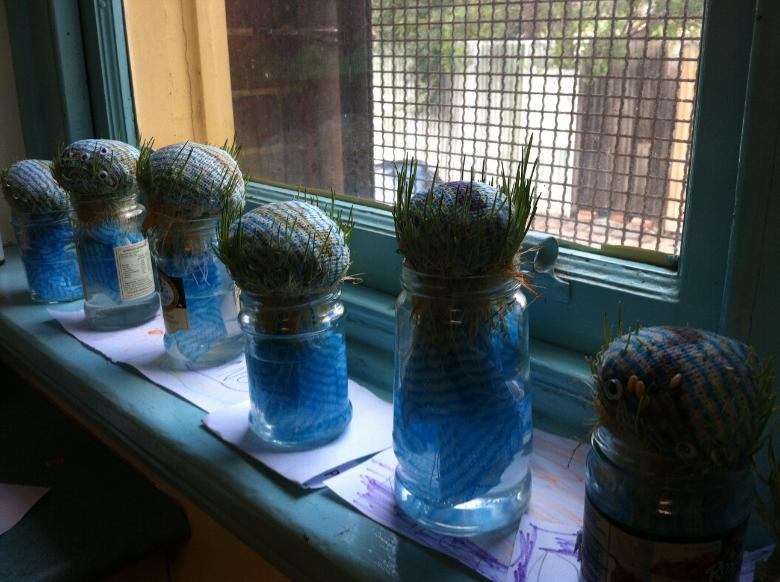
I also reflected on how I could change my science program to allow for less high risk situations, though remain interesting to the students. I decided to focus more on 'growing' earth science / biology - and these experiments had worked in past placements, where I had included a 'Hair Harry' experiment:
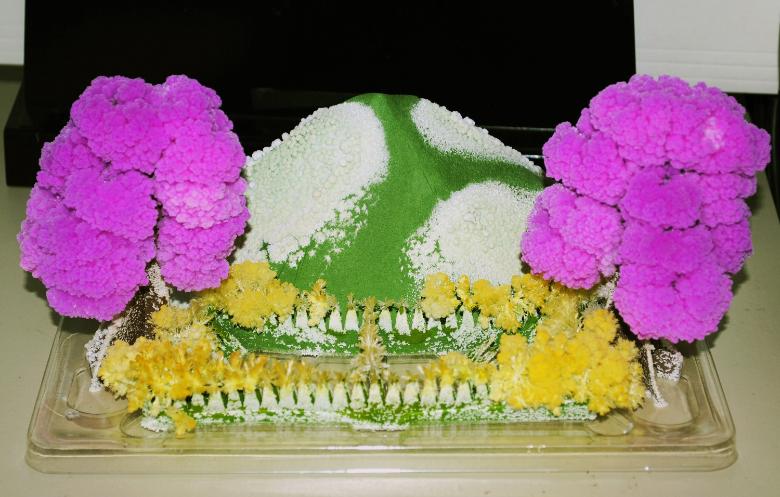
I extended this idea during my PI to incorporate a "Magic Garden" experiment, I bought this at the Science Works gift shop when we went on excursion. This experiment is very exciting and I loved doing these as a child myself so I knew the students would too. The experiment works by growing colorful crystals over a period of 12 hour, combining special salt with water and absorbent cardboard. This was a wonderful experiment as it was professional, and so the students could record the growth of the tree over the period of the day - both pictorially and words. We also focused on predictions with this experiment.
Because both experiments were largely observational, it was lower risk - though just as exciting and effective in learning about change, earth science and biology.

Using ICT in the Classroom Safely
I use a wide range of teaching strategies to ensure that the students are engaged, and given different opportunities to access the information through this delivery. I feel that understanding how to use ICT to add value to the classroom is vital in today’s teaching environment and can be a wonderful tool for whole class research, inquiry and sparking motivation. I am always wary of the ICT resources I use and ensure that I consider safety of students whilst using it. To do this I:
Ensure that I have pre-tested the resource, if it is a clip - I will watch it from start to finish to pick up on anything that might be inappropriate
I check the information provided in the resource is correct and is from a trusted source.
I ensure that I have follow up tasks that link to the curriculum and over reaching content so that the resource is the facilitator - no the driver of the learning - used as a point of enrichment, not the entire teaching tool.
4.3 Manage challenging behavior
Learning how to manage challenging behaviour was something I initially struggled with during my PI. The class I worked with were a mixture of learning types and I considered this to be a key in the mixture of behaviour problems within the class. I noticed:
- that hands-on learners would become bored and unruly during traditional lessons,
- particularly social learners (learning best from collaborative exercises such as peer learning) would struggle if working interdependently
- students who were lagging behind in most curriculum areas would loose patience quickly, and;
- extension students would become bored after finishing their work and begin to cause problems for other students still working.
Obviously, these students need a personalised learning program to cater to their many needs and learning styles, and it was my challenge and responsibility as their teacher to arrange this. As such, I made sure that at the beginning of the day I informed the students of the daily activities: "the Order of Business", writing this on the board so students knew what to expect. As part of the daily order of business, I ensured that I included something for as many types of learners as I could. This would usually consist of:
- a hands-on activity such as a science experiment, embodied learning activity (such as a music lesson) or art work activity
- I included a social activity - such as 'show and tell,' group work activity or game
- an open activity where the students would have free rein to excel and express themselves (for the extension students in particular)
This was very well received, The students loved the consistency and I made it clear to them that I was really trying to accommodate their interests and styles of learning. A hidden bonus was that structuring my program in this way also provided a very varied learning day, motivating the students.I found behavioral problems reduced greatly.
I learned that other considerations should be made to avoid disruptive behaviour, they are:
- establish a class rules and regulations policy, created between students and teacher. Please see a photograph of our established rules, displayed in the classroom:
- Have a sense of when the students are becoming bored with an activity or lesson and be flexible to change it
-
Use techniques such as brain gym activities to transition between lessons (http://braingym.org/) these are wonderful in having the students 'get their wiggles out'
- avoid unnecessary distractions and interruptions during classes
- arrange groups so that rowdy students are not together
- Consider predictable behaviour when arranging lesson programs - for instance, avoid science experiments in the afternoon when the students are rowdy and tired - for instance, avoid science experiments
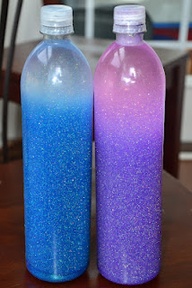
The school had a discipline system in place that was based on three warnings - when the student reached the fourth, they had a 'time out' for 10 minutes. This was the case in another school I taught at and during a fieldwork placement, I noticed that the students were sitting in their "time out" though not really calming down, ready to rejoin the class. If I felt this was required, I used "Time Out Bottles" that the teacher had arranged (see a photograph of an sample of these below).
The "Time Out Bottles" are essentially a bottle with 3/4 water, one bottle of glitter glue, and some fine glitter. If I felt that students needed to be calmed, I would give the student a time out bottle and it worked wonders. One child made a mess with the bottle, and he received a longer time out though this seemed to settle the students very well.
Action Plan, managing difficult behaviour:
To improve my skills in managing difficult and disruptive behaviour, I
will complete a course early in 2013, specifically designed to build
teacher skills in this area: A1:
Teachers' Engagement strategies & skills: Turning behaviour around
available through the "Behavior Management Education" body:
http://www.eduweb.vic.gov.au/edulibrary/public/staffdev/teacher/Mentoring_Beginning_Teachers.pdf
The next installment of the program begins Term 1, 2013 so hopefully I will be working as a teacher from this point and can register for such a wonderful program. The program is year long.
St John Ambulance Victoria is the current provider of Anaphylaxis training for the Department of Education and Early Childhood Development (DEECD) Victorian Government Schools and running HLTFA301B and HLTFA402B, specifically for teachers:
http://www.stjohnvic.com.au/anaphylaxis-victorian-govt-schools.asp
I need to complete this training as soon as possible to be ready to begin teaching in term 1, 2013 and as such I have made inquiries as to the next course running.